
VX350 · AX450 · AX650 bi-fold
Moving glass walls, and the structural conversation nobody has upfront.
Multi-panel doors that stack or pocket into the wall. Straightforward in an existing opening — a remodel with a door in it if you are widening one.
What a moving glass wall actually is
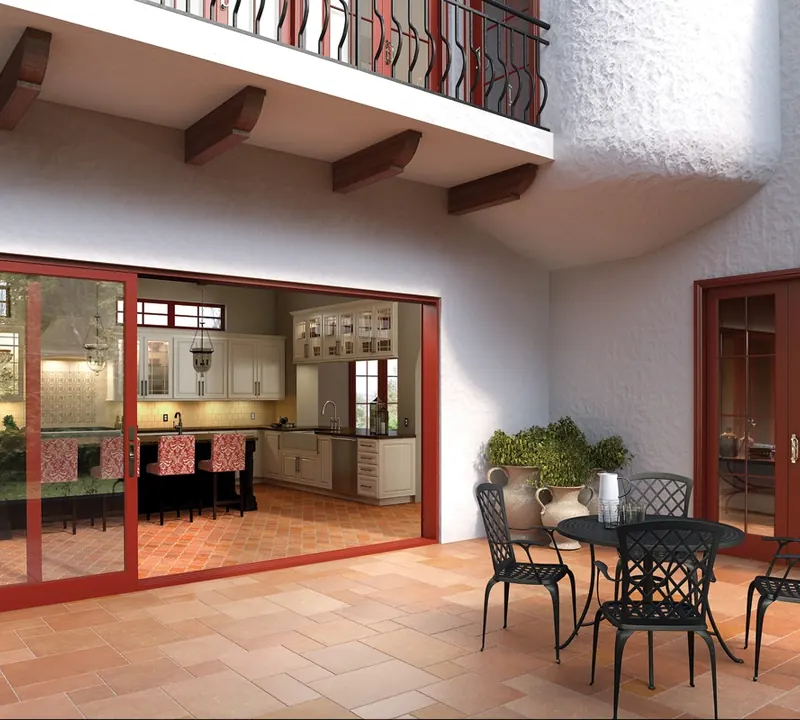
A multi-panel sliding door where the panels stack against each other or disappear into a pocket in the wall, so a run of glass eight, twelve or twenty feet wide opens almost completely. It is the thing that turns a living room and a patio into one room, and it is the single most requested item we get asked about that we then talk people carefully through.
Milgard builds them in vinyl and aluminium. The VX350 is the vinyl system — it costs less and insulates better. The AX450 is aluminium, carrying larger panels with narrower stiles, which is usually why people end up there for a wide opening. The AX650 is the bi-fold, where the panels concertina rather than slide.
The part that catches people out
This is structural work far more often than a window job is. A wide opening in an exterior wall is usually carrying roof load, and widening one means a new header sized by somebody qualified to size it, which means an engineer, a structural permit, and a real construction schedule rather than a one-day install.
If you are replacing an existing slider in an opening that is already the right size, none of that applies — that is a standard patio door replacement. If you are turning a window and a bit of wall into a twenty-foot opening, it is a remodel with a door in it. We will tell you which one you have on the first visit, before anyone gets attached to the idea, because the difference is enormous and it is not fair to discover it later.
Stacking or pocketing
Stacking panels slide and collect against one another at one or both ends. You lose the width of the stacked panels from the opening, but nothing has to happen inside the wall.
Pocketing slides the panels into a cavity built into the wall, so the opening is genuinely clear when open. It is the better result and it costs more, because you are building a pocket, and it requires wall depth you may not have.
Living with one
Two honest points. Big glass on a west elevation is a lot of solar gain, so the glass package matters more here than anywhere else in the house — this is where a low Solar Heat Gain Coefficient earns its money. And multi-panel doors have more moving parts and more track than a standard slider, so they want the track kept clean. In a garden with fine dust or sand, that is a real maintenance habit, not a theoretical one.
The catalogs
The current Milgard Moving Glass Walls brochure (PDF, 2.7 MB) covers the VX350, AX450 and AX650 together, with the panel configurations for each. The rest of the range is on our Milgard series page, and we are an authorized Milgard dealer in Canoga Park.
The ones people actually call about
Questions homeowners ask
What is the Milgard VX350?
Milgard's vinyl moving glass wall — a multi-panel sliding door whose panels stack or pocket so the opening clears almost completely. Vinyl means it insulates better and costs less than the aluminium AX450, at the price of chunkier stiles and lower maximum panel sizes.
What is the difference between the VX350 and the AX450?
Frame material. VX350 is vinyl: better insulation, lower cost, wider frame sections. AX450 is aluminium — narrower stiles and larger panels, so more glass and fewer interruptions across a wide opening, but it conducts heat and costs more. Wide openings tend to push people to aluminium for appearance. The AX650 is the bi-fold version, where panels fold back on themselves instead of sliding.
Do I need a permit and an engineer?
If you are making the opening wider you are altering a load-bearing wall, which needs a properly sized header, an engineer's involvement and a structural permit — that one is not optional. Replacing a door in an existing opening of the same size is a much smaller question, and whether it needs a permit depends on the scope and the jurisdiction. We will tell you which situation you are in on the first visit.
What is the difference between stacking and pocketing?
Stacking panels collect against each other at the end of the run, so you lose that width from the clear opening but nothing happens inside the wall. Pocketing slides them into a cavity built into the wall, giving a completely clear opening — a better result, more expensive, and it needs wall depth you may not have.
Are they a problem in the heat?
They can be, and it is the one thing worth getting right. A large west-facing glass wall is a lot of solar gain, so the glass package matters more here than anywhere else in the house. Specify a low Solar Heat Gain Coefficient and you will be comfortable; take the standard package because it was cheaper and you will notice every afternoon.
Free, in your home, no fee
Find out what it costs
We measure, price every opening separately, and leave the written quote with you. Whether you call us back is up to you.